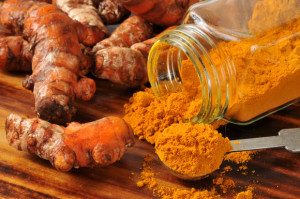
 Turmeric is best-known as the spice that gives some Indian curries and American mustard their vibrant yellow color, but turmeric has been used for thousands of years in Asia for several different things. A close relative of ginger, turmeric is native to southwest India and is used generously in Indian, Bangladeshi and Pakistani cuisines. It has a subtle unique flavor that is at the same time earthy, bitter and slightly peppery. Besides being a flavor agent, turmeric is also used as a dye.
There’s a lot more to this bright yellow powder than meets the eye, however. It has some extremely powerful health benefits that have long been recognized by traditional Chinese medicine and Ayurveda, two of the world’s oldest healthcare systems. While Western medicine historically has lagged behind these traditional systems when it comes to using turmeric, doctors and researchers are finally starting to take note of the powerful healing properties of this natural medicine. And they aren’t the only ones. Because of its extensive healing and disease-prevention properties, many people swear by this little spice, including deVere Group’s CEO, Nigel Green.
Turmeric’s Big Benefits
Turmeric exhibits over 150 potentially therapeutic properties, including anti-inflammatory and anti-oxidant activity, as well as some anti-cancer activities. Curcumin—turmeric’s bioactive compound that gives it its vibrant color—seems to be the primary source of these astonishing, and plentiful, benefits.
Anti-Inflammatory
One of curcumin’s greatest benefits is its potency as an anti-inflammatory. Inflammation is an important response that our bodies use to combat harmful pathogens and repair damage. When inflammation is acute, it can be very beneficial, but chronic inflammation can wreak serious havoc on our bodies. Chronic, low-level inflammation is a known contributor to many Western diseases such as heart disease, cancer, metabolic syndrome, Alzheimer’s and countless other degenerative diseases. This means that anything that can help stave off this low-level inflammation could have massive health implications. Studies are now showing that curcumin can do just that. Curcumin has potent anti-inflammatory properties; so potent, in fact, that it can match the effectiveness of some anti-inflammatory drugs.
In the March 2014 issue of the Journal of Clinical Interventions in Aging examined the effects of turmeric on knee osteoarthritis pain. Over a four week period two randomized groups were given either turmeric extract or the daily upper limit dose of ibuprofen. The findings were really incredible. The turmeric group experienced the same level of discomfort relief as the ibuprofen group, but with more relief from joint stiffness. In addition, those taking the turmeric extract experienced significantly fewer side effects than those taking the NSAID.
In addition to this recent studies, others have concluded that curcumin can limit the inflammatory responses that underpin both rheumatoid and osteoarthritis just as well as ibuprofen and other potent drugs. The only key difference is that curcumin produces no toxicity, unlike the drug treatments typically used to combat these conditions.
Anti-Oxidant
In addition to being a potent anti-inflammatory, curcumin is also lauded as a powerful anti-oxidant. Simply put, when there is an imbalance between the production of free radicals and our body’s ability to counteract their harmful effects through neutralization by anti-oxidants, oxidative stress occurs. These free radicals chemically interact with cell components, such as DNA, proteins and lipids, stealing their electrons and destabilizing the cell component. This then triggers a large chain of free radical reactions as these cell components steal electrons from others in an attempt to once again reach a stable state. This process can lead to a number of health issues: neurodegenerative diseases, cardiovascular disorders, gene mutations, cancers and even inflammatory diseases.
Our protective agents against these free radicals are anti-oxidants. These generous molecules donate an electron to free radicals, making them stable so that they do not have to steal electrons from our cell components. Curcumin in and of itself is a powerful anti-oxidant. Its chemical structure allows it to donate electrons and neutralize free radicals effectively. But it also boosts the activity of our body’s own anti-oxidant enzymes. In this way, curcumin attacks harmful free radicals from all sides.
Liver Detox
Most people are unaware, but toxins are entering everyone’s body every single day. The food we eat, the water we drink and the air we breathe are all full of toxins in varying amounts. It is the liver’s job to expel these potentially harmful chemicals from the bloodstream. But if the liver becomes overwhelmed with toxins, be it because the level in the blood is too high or because the liver is not functioning at optimal capacity, these toxins can lead to a whole host of problems in our bodies.
Yet another one of curcumin’s astonishing benefits is its ability to assist our livers in the detox process. Our livers use bile to remove the toxins in our blood and carry them into the small intestine. The University of Maryland Medical Center states that curcumin stimulates the production of this bile, making the detox process in our livers happen faster and more efficiently.
Curcumin’s ability to stimulate liver detox is one of the primary reasons why deVere Group CEO Nigel Green has added turmeric extract to his daily supplement regimen. His body has difficulty detoxing effectively on its own. This supplement gives his liver the boost it needs to adequately strain the toxins out of his blood, keeping him happy, healthy and firing on all cylinders.
Neurological Degeneration Prevention
Evidence is also growing regarding curcumin’s potential to guard against neurological decline, particularly Alzheimer’s disease. People in India display much lower rates of Alzheimer’s and dementia, which may be attributed to the comparatively high volumes of turmeric present in their diet. While there are most likely other factors that also contribute to the low rates of these neurological disorders in India, turmeric/curcumin has garnered a significant amount of attention for its potential to both inhibit the onset of brain disease, as well as serve as a treatment.
A recent study conducted at Vanderbilt and published in the Journal of Alzheimer’s Disease in 2015 found that curcumin demonstrates the ability to break up beta-amyloid plaques, the protein fragments that drive the irreversible loss of neurons in Alzheimer’s. One of the reasons why Alzheimer’s is notoriously difficult to treat is that the blood-brain barrier, while it protects the brain from harmful toxic molecules, restricts drug delivery to the brain. This restriction also extends to curcumin. When it is administered intravenously, it has difficulty crossing from the bloodstream into the brain. To remedy this, the researchers at Vanderbilt used a compound analogous to curcumin, called FMeC1, and a unique approach to administering the compound. They developed an atomizer that would generate a curcumin aerosol that could be breathed in and delivered to the brain much more efficiently.
But we don’t have to have a nebulizer to enjoy the brain benefits curcumin has to offer. Researchers have found that curcumin supplements in general can increase brain function overall, including short-term memory and mental acuity.
Cancer Prevention
One of turmeric’s benefits that doctors and scientists are getting most excited about is its potential to prevent and treat one of today’s leading causes of death—cancer. Intense studies are now underway on how turmeric, specifically curcumin, may inhibit the growth, development and spread of all types of cancers at a molecular level. Although cancers exhibit such a wide variety of molecular pathologies, these studies are showing that curcumin may be effective for every type of cancer.
This unique ability to fight all cancers is due in large part to the fact that curcumin can affect more than 100 molecular pathways once it gets into the cell, including inhibiting the increase in tumor cells, the synthesis of a protein thought to stimulate tumor formation and the transformation of normal cells into tumor cells. In addition, curcumin also promotes anti-angiogenesis, the process by which the body prevents the development of the additional blood supply required for cancer growth.
Overall, the results of these studies are incredibly promising, especially since curcumin does not adversely affect healthy cells. It is surely just a matter of time until this natural compound is being used in conjunction with chemotherapy drugs for cancer treatment.
Other Benefts
And, believe it or not, turmeric’s benefits don’t stop there. Studies are also showing that it can impact our health in a number of other ways, including:
- Lowering the risk of heart disease by improving endothelial function
- Possibly alleviating depression
- Aiding in digestion and easing gastrointestinal disorders
- Promoting radiant skin
- Fighting bacterial, fungal and viral infections
- Regulating blood sugar
- Healing wounds
How to Supplement with Turmeric and Curcumin
Because turmeric has a very subtle flavor, it is an incredibly easy spice to incorporate into cooking, even when curry isn’t on the menu. Throw it in meat marinades, whisk it into salad dressings or even mix it into the boiling water used to make rice, quinoa or pasta. You can even make some delicious turmeric tea. Unfortunately, however, the curcumin concentration in turmeric is only about 3%. To optimize this compound’s extensive benefits you either have to consume a TON of turmeric, or you can take a turmeric extract supplement, just make sure to choose the right one. Because curcumin is not easily absorbed by our bodies, you should choose a high-quality brand that is formulated for bioavailability and that is at least 95% curcuminoids.
While there has been a huge amount of research done on the health benefits of turmeric and curcumin, there is still no consensus on a standard effective dosage. As a result, it is advised that you follow the instructions on your supplement’s label or consult your physician regarding your dosage before beginning a supplement regimen.
Leave a Reply